
















How to Make Employee Advocacy and LinkedIn Thought Leadership Attributable

Employee advocacy creates visibility, engagement and trust long before an opportunity appears in the CRM. A better attribution model captures that full contribution while connecting relevant posts, campaigns and people to website traffic, pipeline and revenue.
TL;DR: Quick summary
One metric is never enough
Employee advocacy and LinkedIn thought leadership should not be measured through one number. Impressions, engagement, follower growth and employee participation are real results. They show whether the company is building visibility, whether its people are becoming recognised and whether its ideas resonate with relevant audiences.
Connect activity to outcomes where the data supports it
Where employee posts include links, companies can go further by tracking website visits and conversions using unique links and UTM parameters. CRM data, self-reported attribution and information captured during sales conversations can then help connect LinkedIn activity to sourced and influenced pipeline.
The goal is a credible measurement system
The objective is to build a credible measurement system that shows the complete contribution of employee and executive content, without forcing every LinkedIn interaction into a revenue figure.
Heyoo brings the layers into one platform
Heyoo brings employee advocacy, managed thought leadership, team-wide LinkedIn analytics and trackable links into one platform. This enables marketing teams to connect campaigns, employees and posts to visibility, engagement, traffic, pipeline and revenue.
Employee advocacy creates value before a lead appears
Imagine employees published 180 LinkedIn posts. The posts generated tens of thousands of impressions, new followers and good engagement. Employees and executives became more visible. Marketing created sustained attention around themes the company wanted to be known for.
Those are meaningful results.
But the data is often spread across individual LinkedIn profiles, screenshots, analytics platforms and CRM records. Marketing can see parts of the impact without having one coherent view of what the programme is creating.
That makes employee advocacy and LinkedIn thought leadership difficult to evaluate properly.
Impressions, reactions and follower growth are important measures of employee advocacy and thought leadership. They show whether the company is earning attention, whether employees and leaders are becoming more visible, whether their content resonates with the market and whether they are building an audience over time.
The opportunity is to measure these results properly and, where relevant, connect them to further outcomes such as website activity, pipeline and revenue.
Measurement should not stop at LinkedIn analytics. But it should not dismiss those analytics either.
At the other extreme, judging every employee post by the number of leads it generated is equally incomplete. Not every post is designed to create an immediate conversion. Much of the value of employee-led content develops before a buyer visits the website, completes a form or enters the CRM.
A better attribution model shows the programme’s complete contribution: employee activation, content output, visibility, engagement, audience growth, website activity and, where the data supports it, pipeline and revenue.
There is a motivational payoff too. Heyoo’s Q2 2026 research, a cohort analysis of 25 workspaces over 90 days, found that companies tracking pipeline and revenue attribution back to employee LinkedIn activity see 42% more user activation in Heyoo. Activation here means the share of invited employees still publishing after their first 60 days. Commercial results became visible around the 60-day mark, and once employees could see the impact of their posts, more of them kept going. In follow-up interviews, participants described the difference as a sense of "progress" and "actual impact", rather than posting into a void.
Start with what the programme is meant to achieve
Employee advocacy can support several objectives at the same time. A product marketing team might activate subject-matter experts around a launch. Employer branding might involve employees in showing what it is like to work at the company. Salespeople may use LinkedIn to remain visible among target accounts. Executives might publish thought leadership to shape how the market understands an emerging problem. This is the range an employee advocacy programme has to account for.
These activities should not all be evaluated in exactly the same way.
A campaign around a webinar may be expected to create registrations. A campaign supporting a research report might focus on relevant reach, link clicks and downloads. Executive thought leadership may be intended to build recognition and credibility among senior buyers over a longer period.
The measurement model therefore needs to begin with the objective.
Good attribution answers three questions:
- What was the programme or campaign intended to achieve?
- What happened after employees and thought leaders published?
- What evidence connects that activity to wider business outcomes?
This prevents marketing from treating every metric as interchangeable. It also prevents pipeline from becoming the only measure of value.
Visibility is an important employee advocacy outcome
Impressions are sometimes dismissed as a vanity metric because they do not prove purchase intent.
Visibility is still valuable, especially in B2B markets where buyers rarely make decisions after encountering a company once. Familiarity develops through repeated exposure to useful ideas, recognisable people and consistent points of view.
Employee advocacy increases the number of credible people through whom that exposure can happen.
A company-page post primarily reaches the company page’s audience. Employee posts travel through the professional networks of salespeople, consultants, product specialists, recruiters, executives and subject-matter experts.
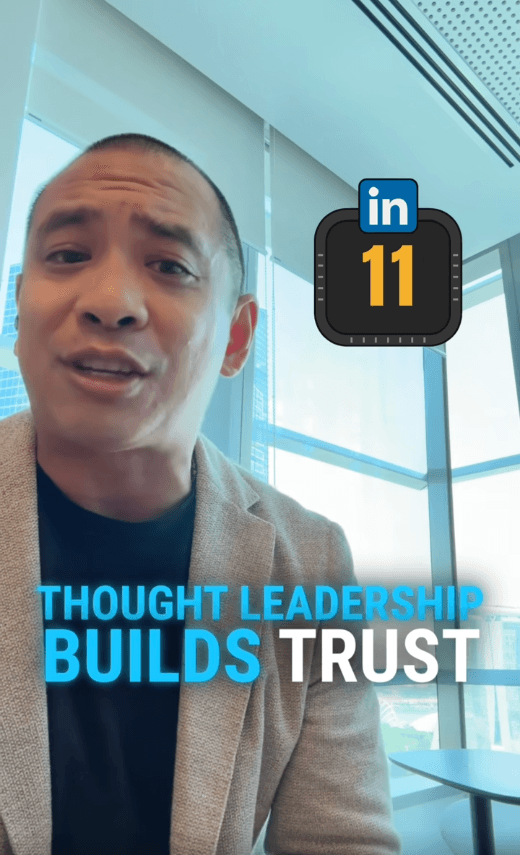
LinkedIn’s own leadership puts numbers on that gap.
“Employee posts get 12X more reach than brand pages and execs 7X more engagement.”
Value builds up across posts. When relevant people inside the company consistently discuss subjects that matter to their networks, that cumulative presence is what shifts how the market sees the company.
That visibility can contribute to:
- brand recognition
- familiarity within target accounts
- professional credibility
- employer awareness
- recognition of employees as experts
- greater distribution around launches and events
- stronger visibility for company content
Impressions help marketing understand whether that presence is growing. They become more useful when analysed by campaign, employee group, content theme and time period rather than reported only as one large total.
Engagement shows whether ideas resonate
Visibility shows that the content appeared in people’s feeds. Engagement shows that part of the audience actively responded.
Reactions can indicate that a subject resonates. Comments can reveal whether a post creates a meaningful conversation. Reposts extend an idea into additional networks. Profile views and follower growth suggest that readers want to learn more about the person behind the content.
Not every engagement has equal value. A broad post may receive many reactions from people outside the intended audience. A specialist post may receive fewer reactions but attract comments from prospective buyers, existing customers or recognised industry experts.
Marketing should therefore look at the amount and relevance of engagement alongside the engagement rate.
Useful questions include:
- Which themes generate the most relevant engagement?
- Which employees reach audiences the company wants to influence?
- Which posts attract responses from target roles or accounts?
- Which employees are growing relevant professional audiences?
- Which perspectives create substantial conversations?
- Which campaigns continue generating engagement after the initial publication period?
This analysis also improves future content.
The answer is not to make every employee copy the highest-performing post. One company strategy does not require one company voice. Marketing should identify which themes resonate while preserving the individual opinions, experiences and language that make employee content credible.
Measure the programme through connected layers
A practical employee advocacy framework should measure several connected layers. Each layer answers a different question.
Are employees and thought leaders participating?
Before measuring reach, marketing needs to know whether the programme is active.
- employees invited
- activated employees
- active contributors
- participation rate
- posts published
- posting frequency
- campaign adoption
- activity by team, department or market
These metrics show whether employee advocacy has become a repeatable programme or remains an occasional request from marketing.
A campaign might underperform because the topic did not resonate. But it might also underperform because only a few employees participated or because posts were published after the relevant business moment. Participation data helps separate those causes.
The objective is not to maximise the number of posts at any cost. Employees should be supported, never forced to publish. But consistent and voluntary participation is the foundation of the programme.
Is the programme creating visibility?
The next layer shows whether employee-led content is reaching the market.
- total impressions
- average impressions per post
- impressions by campaign
- impressions by employee group
- profile views
- followers gained
- performance over time
- estimated earned media value
Brought together in one analytics dashboard, these metrics show the scale of the organic distribution network the company is building. They can also reveal where visibility is concentrated.
Perhaps most impressions come from a small number of executives. Perhaps subject-matter experts with smaller networks consistently reach highly relevant audiences. Perhaps one department publishes regularly while another has not yet adopted the programme. Each insight can influence how marketing supports the team.
Earned media value can provide an additional estimate of what comparable reach or traffic might have cost through paid distribution. It should be labelled clearly as media value rather than treated as revenue. Employee advocacy complements paid media. It does not need to replace it.
Does the content resonate?
The engagement layer helps marketing understand how audiences respond.
- reactions
- comments
- reposts
- engagement rate
- follower growth
- profile activity
- engagement from target accounts
- performance by content theme
- performance by employee or team
Quantitative and qualitative analysis both matter. A good engagement rate is useful. A thoughtful comment from a potential buyer may reveal something the overall rate does not. Looking at the people and conversations behind the metrics creates a more accurate picture of content quality.
Does the content create measurable website activity?
When a post includes a link, marketing can measure whether audiences take a further step. That might include visiting:
- a research report
- a webinar page
- a customer story
- an event page
- a blog post
- a product page
- a job vacancy
- a demo page
Unique tracked links and consistent UTM tagging can connect website activity to the campaign, post and employee. This creates a measurable path:
Campaign → employee → LinkedIn post → click → website visit → conversion
A useful UTM structure can identify the channel, campaign, employee, post and content destination. The naming convention is less important than consistency. If each marketing manager uses a different structure, reporting becomes fragmented as the programme grows.
Not every post needs a link. Thought leadership loses credibility when every useful idea ends with a promotional call to action. Links should be used when they naturally support the post.
Does the programme contribute to pipeline and revenue?
The final measurement layer connects employee activity to commercial outcomes.
- leads generated through employee links
- opportunities originating from LinkedIn posts
- pipeline associated with an advocacy campaign
- opportunities influenced by executive or employee content
- closed-won revenue connected to attributed opportunities
- prospects who mention LinkedIn content during sales conversations
This layer is more difficult because B2B buying journeys are rarely linear. A buyer may see several employee posts, follow an executive, visit the website directly and later respond to a sales email. The CRM may record the opportunity as direct, organic search or sales-sourced.
LinkedIn may still have contributed to familiarity or trust, even when it did not produce the final measurable click. That is why credible multi-touch attribution requires several forms of evidence.
Track direct actions with unique links and UTMs
The clearest attribution path starts with a tracked click.
An employee shares a research report through a unique link. A prospect clicks, visits the website and completes a form. If the original tracking data is retained, marketing can identify the campaign, employee and post connected to the conversion.
This can support direct attribution at contact, account or opportunity level.
The tracking structure should align with the company’s existing analytics and CRM fields, for example a CRM like HubSpot or Salesforce. Employee advocacy should become part of the wider attribution model rather than creating a separate reporting system.
A standard structure might capture:
- source
- medium
- campaign
- employee
- post or content variation
- destination
This makes it possible to compare campaigns while still identifying the contribution of individual employees and posts.
Use self-reported attribution to capture remembered influence
Tracked links cannot capture every interaction. A buyer may read a post without clicking. They may later search for the company, contact a salesperson directly or ask a colleague for an introduction.
Self-reported attribution can help capture part of this influence.
The most useful place to capture it is a structured deal source field in the CRM. Instead of one broad "LinkedIn" option, a deal source dropdown can go a level deeper into how the relationship actually started.
A deal source dropdown might include values such as:
- Employee LinkedIn post
- Executive or founder LinkedIn post
- Managed profile or thought leader post
- Advocacy campaign link
- Employee referral or introduction
- Company page post
Because the deal source is a defined dropdown value rather than free text, it stays consistent across the whole team. That is what makes it analysable later. Revenue operations can pull a report or build a dashboard grouped by deal source and see exactly how much pipeline started with an employee LinkedIn post.
The buyer can help populate this from the very first touch. A signup or demo request form can ask how they heard about the company as a dropdown rather than an open text box, so the answer arrives in a consistent, reportable shape instead of loose wording.
How did you first hear about us?
The dropdown can offer distinct options such as:
- A specific employee’s LinkedIn post
- A founder or executive’s LinkedIn post
- A colleague shared a LinkedIn post with me
- I follow someone from your company on LinkedIn
- Several people from your company kept appearing in my feed
- Your company page on LinkedIn
- Other (with a free-text field)
These options are designed to correspond to the deal source values, so the form, the CRM and the reports use the same language. Where an answer has no exact deal source match, revenue operations can map it to the closest value, and the "Other" field preserves the nuance for anything the list does not cover. These responses reveal interactions that website analytics may not detect.
Self-reported attribution is not perfect. Buyers may not remember every interaction accurately. But when it is captured as a structured deal source rather than a loose note, it becomes an important and reportable form of evidence: the touchpoint the buyer personally remembers.
Help sales capture LinkedIn influence
Sales conversations often contain useful attribution information. A prospect may mention that they recognise the founder, regularly see posts from employees or already understand the company’s perspective because they follow one of its experts. This is social selling working in the background of a deal.
Sales teams do not usually record these comments consistently. Marketing can help by introducing one simple CRM field or discovery prompt:
Did the prospect mention LinkedIn content, an employee or a company thought leader?
The field could capture:
- the person mentioned
- the relevant topic or campaign
- whether the content appeared to source or influence the opportunity
- a short note from the conversation
The process should remain lightweight. Sales representatives only need an easy way to preserve relevant information when a prospect mentions it.
Without this process, potentially useful attribution evidence remains buried in meeting notes or disappears entirely.
Separate sourced pipeline from influenced pipeline
Employee advocacy can contribute to opportunities in different ways. Those differences should be reflected in reporting.
LinkedIn-sourced pipeline
An opportunity can be considered sourced when an identifiable employee or executive post creates the first known conversion. For example:
- An employee shares a webinar through a tracked link.
- A prospect clicks and registers.
- The prospect later requests a conversation.
- The contact becomes an opportunity.
The path is direct and traceable.
LinkedIn-influenced pipeline
An opportunity is influenced when LinkedIn content contributes to awareness, familiarity or trust but does not create the first measurable conversion. For example:
- A buyer sees several posts from an executive.
- The buyer follows the executive and reads further content.
- Months later, they respond to an outbound message.
- During the call, they mention already knowing the executive’s perspective.
The outbound activity may have sourced the opportunity. LinkedIn influenced the relationship.
Both categories matter. Reporting them separately creates a more credible picture than combining every connected opportunity into one large revenue number.
Thought leadership needs a longer measurement window
Campaign-led employee advocacy and managed thought leadership often operate on different timelines.
A campaign around an event or webinar might produce measurable clicks and registrations within several days.
Thought leadership builds value more gradually. An executive or expert becomes associated with a topic through consistent publishing. A buyer may read several posts before following the person, visiting the company website or entering an active buying process months later.
A short attribution window can therefore understate the contribution of thought leadership.
The measurement period should reflect the company’s typical sales cycle. For a complex B2B purchase, looking only at activity within seven or 30 days will miss much of the potential influence.
That does not mean every future opportunity should be attributed to LinkedIn. Longer measurement windows still require evidence such as tracked visits, relevant engagement, self-reported attribution or sales feedback.
How Heyoo fits into employee advocacy attribution
Heyoo brings employee advocacy, managed thought leadership and LinkedIn measurement into one employee advocacy platform.
Marketing teams can create Advocacy Campaigns around strategic themes, events, launches, research, customer stories or employer branding. Each participating employee receives three personalised post suggestions based on the campaign objective, company profile, their role, interests, tone of voice and points of view.
Employees remain in control. They can select, edit and publish the suggestion that fits them. For executives and subject-matter experts, marketing can use Managed Profiles to collect input, prepare content, schedule posts and use approval workflows to keep profile owners involved.
Heyoo then connects the programme’s activity to several measurement layers.
Measure LinkedIn performance across the team
Heyoo is an official, LinkedIn-approved application that uses LinkedIn’s official analytics API. It gathers data on impressions, posts, engagement, comments and more for your whole team, combined in one single dashboard. Heyoo’s Post Analytics brings results from participating employees and managed profiles into that one view.
Marketing can analyse metrics such as:
- active contributors
- posts published
- impressions
- reactions
- comments
- engagement rate
- followers gained
- clicks
- earned media value
Results can be viewed by employee, group, post and time period. This replaces the process of asking employees to provide analytics screenshots or maintaining separate reporting spreadsheets.
It also allows marketing to move between programme-level and individual-level questions. The team view shows the collective effect of employee advocacy. Individual and post-level views show which people, themes and content approaches contributed to that performance.
Connect clicks to employees, posts and campaigns
Heyoo can create unique trackable links for individual posts and employees. This allows marketing to see which person, post and campaign generated a click. UTM parameters can extend the same information into the company’s website analytics.
The measurement path becomes:
Heyoo campaign → employee → post → tracked click → website activity
This is particularly useful for campaigns promoting events, reports, customer stories, product updates or other website content. Employees can still publish personalised posts. The tracking structure remains consistent even when the content differs between people.
Connect advocacy data to commercial reporting
When tracking data is passed into the company’s analytics and CRM setup, marketing can connect employee advocacy to contacts, accounts and opportunities. Heyoo integrates with your CRM, so depending on the company’s implementation, the HubSpot integration or Salesforce integration can be used to build reports, audiences and workflows, and to associate attributed LinkedIn activity with the right accounts, opportunities and deals.
The exact pipeline and revenue attribution depends on the CRM structure, available fields, form setup and attribution definitions.
Heyoo provides the connection between the campaign, employee, post and click. The company’s analytics and CRM systems provide the following steps towards contacts, opportunities, pipeline and revenue. Sales feedback and self-reported attribution can complement this tracked data to capture influence that does not involve a direct click.
Report the full contribution of the programme
Heyoo allows marketing to report employee advocacy as more than a single metric. A complete report can show each contribution alongside example metrics:
- Employee activation: active contributors, participation and posts published
- Visibility: impressions, profile views and follower growth
- Engagement: reactions, comments and engagement rate
- Website activity: clicks, sessions and conversions
- Commercial contribution: sourced opportunities, influenced pipeline and revenue
- Media value: estimated value of organic reach and clicks
- Efficiency: time saved creating and coordinating content
These results should remain distinct. Earned media value is not closed-won revenue. Influenced pipeline is not the same as directly sourced pipeline. Impressions are not conversions. But all of them contribute to understanding whether the programme is working.
To turn those layers into a single business case, you can put a number on earned media, pipeline and time saved in a couple of minutes.
See how Heyoo’s Post Analytics measures the whole team in one dashboardConclusion: Connect the outcomes, do not choose between them
Employee advocacy and LinkedIn thought leadership create value at several levels.
They help employees and executives become more visible. They build professional audiences. They create engagement around subjects the company wants to be associated with. They distribute useful content through credible personal networks.
Some posts also generate measurable website visits, conversions, pipeline and revenue.
A strong attribution model connects these outcomes. Marketing should measure participation, visibility, engagement, website activity and commercial contribution separately, then show how they work together.
The result is a credible and commercially useful view of how employee and executive voices contribute to attention, trust, demand and business growth. No attribution model can prove that every impression caused revenue, and this one does not need to.
Marketing provides the structure. Employees and experts provide the perspective. Attribution shows what those voices achieve together.
If you want to size the upside before you scale, calculate the ROI on a programme like this in two minutes.

 Open in Claude